Sorted by
Newest posts Popular Latest activity
 
July 15
00:37

📚The interphalangeal (IP) joint is the only joint between the two bones of the thumb: the proximal and distal phalanges. It functions as a simple hinge joint, allowing the thumb to bend (flexion) and straighten (extension).

🧠Although it has a relatively small range of motion compared to the other thumb joints, the IP joint plays an important role in precision grip. Every time you button a shirt, write with a pen, text on your phone, or pick up a small object, the IP joint helps position the thumb with accuracy.

🔎The primary muscle responsible for bending the joint is the flexor pollicis longus (FPL), while straightening is produced mainly by the extensor pollicis longus (EPL). Together, these muscles provide the fine motor control needed for everyday tasks.

✅Pain, stiffness, or arthritis at the thumb IP joint can make even simple activities surprisingly difficult. Maintaining mobility and strength throughout the thumb can help preserve hand function as we age.

2
 
July 14
Image from Tom W.'s post

A new video on movement tests to help identify frozen shoulder is available here in the app. Here is a link for the video.

https://membership.rehabscience.com/programs/frozen-shoulder-tests?utm_source=product&utm_medium=share&utm_campaign=content_share&utm_term=4267668&utm_content=mobile

 
July 10
Image from Tom W.'s post

Hi everyone, 

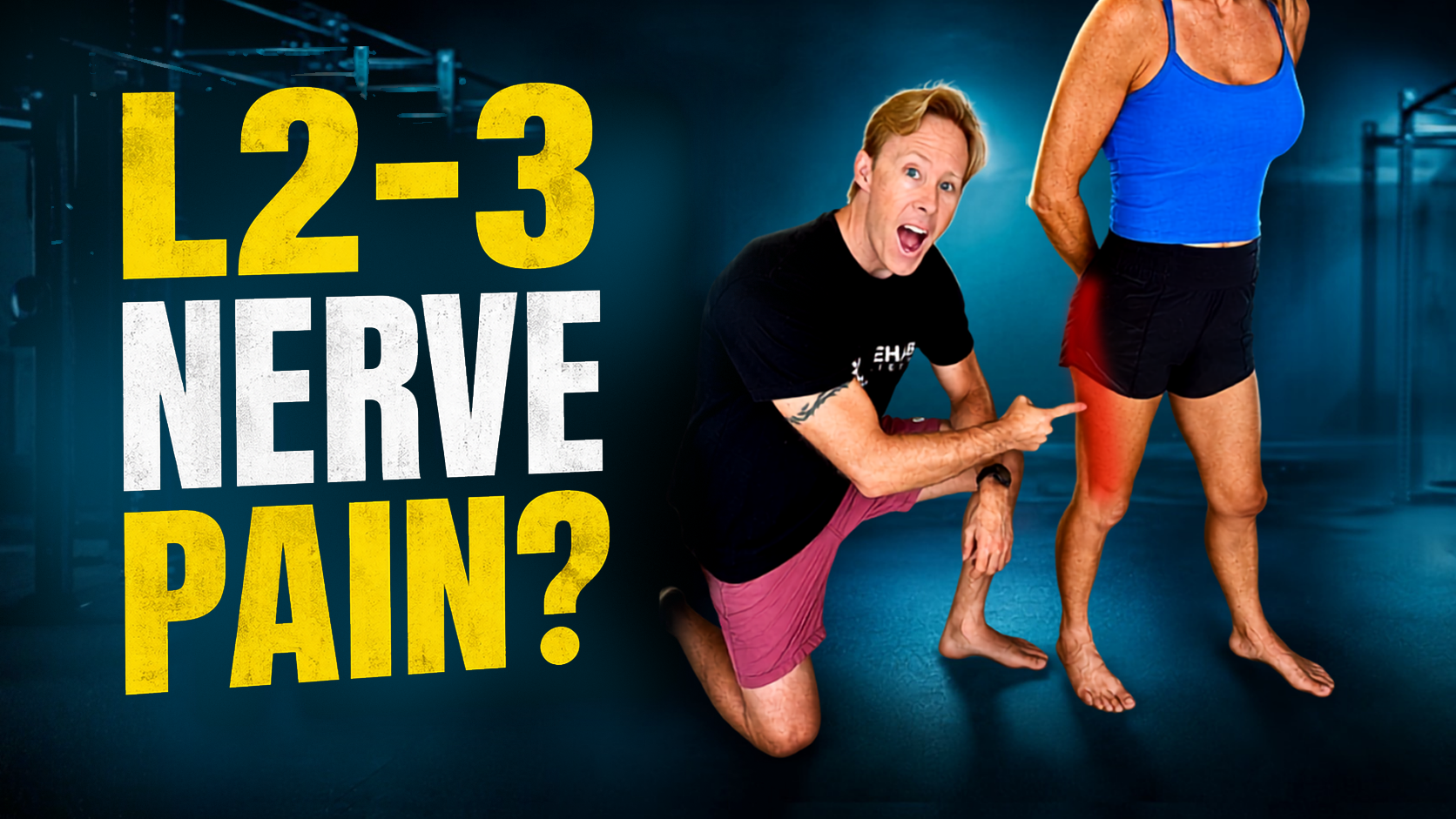
Here is a replay from today's office hours session. We discussed several issues, including cervical disc injuries, patellofemoral joint pain, IT band syndrome and nerve referral from the low back.

https://membership.rehabscience.com/programs/071026-9e23bc?utm_source=product&utm_medium=share&utm_campaign=content_share&utm_term=4266612&utm_content=copy

 
July 08
Image from Tom W.'s post

Hi everyone, 

Our next office hours session will be this Friday at 10am PT. Please visit the link below to RSVP. This is your opportunity to ask me your specific rehab questions. I hope to see you there!

https://membership.rehabscience.com/programs/live-f0tquugb3do?utm_source=product&utm_medium=share&utm_campaign=content_share&utm_term=4264387&utm_content=copy

2
 
July 07
Image from Tom W.'s post

Hi everyone! A new video on Flexor Hallucis Longus (FHL) tendinopathy rehab is now available here in the app. If you have pain underneath your big toe, in the arch of your foot or on the inside of your ankle, these exercises are good to implement. Here is a link for the video.

https://membership.rehabscience.com/programs/fhl-rehab?utm_source=product&utm_medium=share&utm_campaign=content_share&utm_term=4261553&utm_content=mobile

 
July 06
00:16

👉Shoulder instability describes a condition of increased joint mobility that affects the static stabilizers of the shoulder joint (labrum, capsule and ligaments).

🔎When looking to improve shoulder stability, it’s important to perform exercises that target the four rotator cuff muscles and the other muscles that move and control the scapula (trapezius, serratus anterior, etc).

🧠Besides adding these types of exercises, it’s also important to consciously focus on activating the muscles that surround the shoulder joint when lifting the arm overhead or away from your body.

✅A more comprehensive program for shoulder instability can be found here in the app. Here is a link for the program.

https://membership.rehabscience.com/programs/shoulder-instability?category_id=259882

 
July 03
00:10

📚The neck or cervical spine includes seven vertebrae that are separated by six fibrocartilaginous intervertebral discs.

🧠The discs act as shock absorbers and also function as passive stabilizers of the spinal motion segment (2 vertebrae and the disc between them).

🔎This cervical fluoroscopy showcases flexion and extension of the cervical spine and is a great visual tool for observing our anatomy in action!

 
June 30
00:17

📚The IT band (ITB) is a dense, fibrous band of connective tissue that runs along the lateral thigh from the hip to the knee. ITB syndrome typically manifests as lateral knee pain (see image) and is one of the most common overuse injuries occurring in 12-25% of runners and 12.5% of cyclists.

🧠While stretching may help temporarily reduce pain in some people, research suggests that affected individuals should focus on incorporating exercises that strengthen the hip ABDuctors and motor control exercises designed to prevent the affected limb from deviating away from neutral when standing on one leg as this may sensitize the region.

🔎In general, 3 sets of 8-12 repetitions of each exercise should be performed 2-3 times per week. On the standing exercises, focus on keeping the knee aligned over the foot.

✅The app includes a more comprehensive IT band program that guides you through three phases of rehab. Click the link below to access the IT band syndrome program.

https://membership.rehabscience.com/programs/iliotibial-band-pain?category_id=258965

 
June 28
• Edited (Jun 28, 2026)
00:26

📚The fibularis muscles (fibularis longus & fibularis brevis) run along the lateral lower leg and serve as the primary evertors of the ankle.

🔎Besides everting the ankle and assisting in plantarflexion, the fibularis muscles also help stabilize the ankle during standing tasks, especially when on one leg or navigating uneven surfaces.

🧠During more severe inversion ankle sprains, the fibularis muscles (along with the lateral ankle ligaments) can be stretched and injured.

👉If you have pain in this region or have suffered a recent ankle sprain, the massage technique shown here may help reduce pain and improve function.

✅Besides trying this technique, you would also want to add exercises that strengthen these muscles. The ankle sprain program here in the app will teach you exercises for these muscles. Here is a link for the ankle sprain program.

https://membership.rehabscience.com/programs/ankle-sprain?category_id=261017

 
June 24
Image from Tom W.'s post