
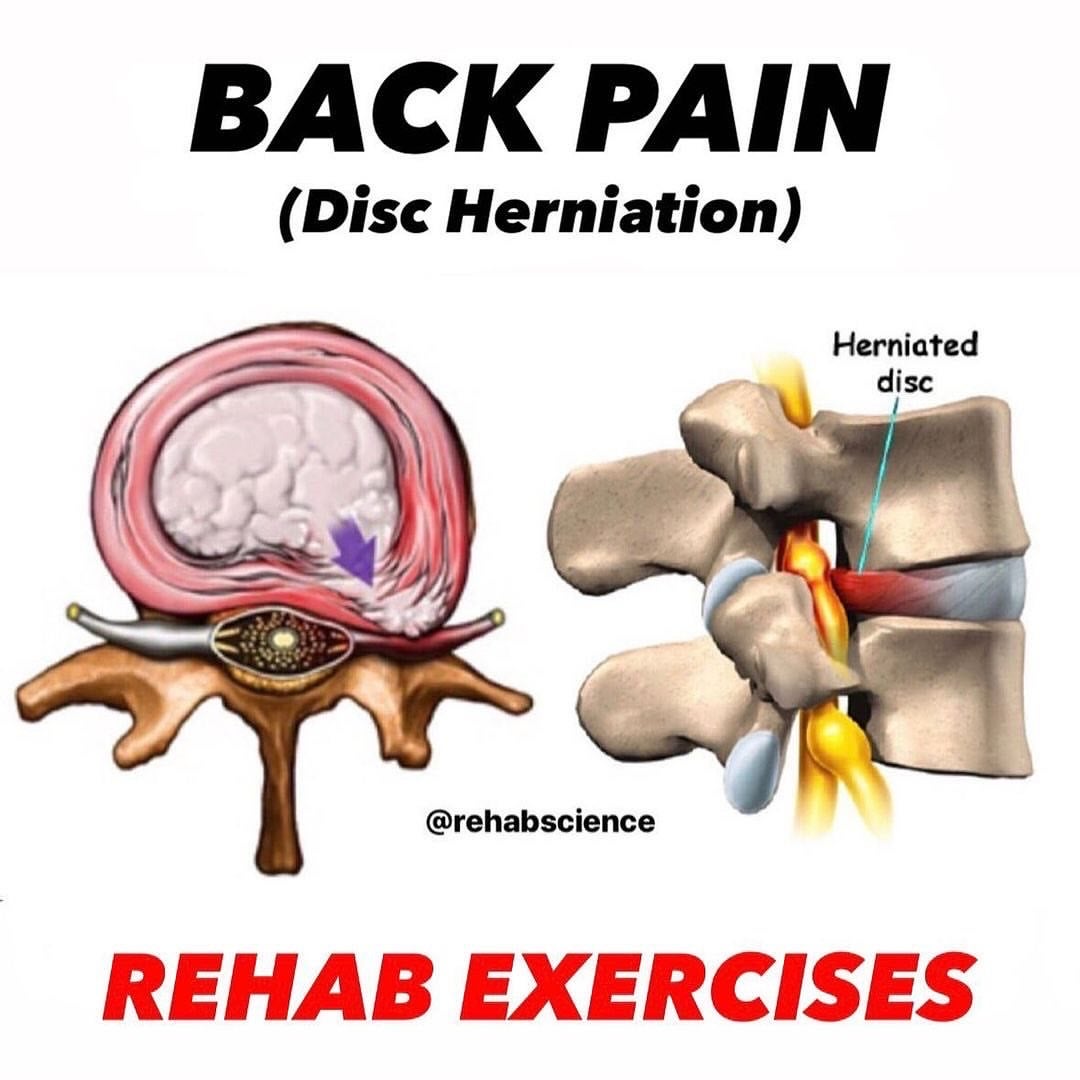

📚Lumbar disc herniations occur when the soft, gel-like center (nucleus pulposus) of a spinal disc in the lower back bulges or leaks through a tear in the tougher outer layer (annulus fibrosus).
🔎When a disc herniates, it may irritate or even mechanically compress nearby nerves, causing pain, numbness, or weakness in the lower back, legs, and sometimes feet. The severity of symptoms varies, with some individuals experiencing mild discomfort, while others suffer from significant neurological deficits depending on the location and extent of the herniation.
🧠It’s important to note that many of us with no pain (asymptomatic) actually have degenerative disc changes and disc herniations that would be visible on an MRI. Furthermore, many disc herniations heal and reabsorb without surgery.
✅If you or one of your clients are suffering from a lumbar disc herniation or disc bulge, I would encourage you to implement the exercise exercises in the nerve pain program here in the membership. Here is a link for that program.
https://membership.rehabscience.com/programs/sciatica?category_id=259689