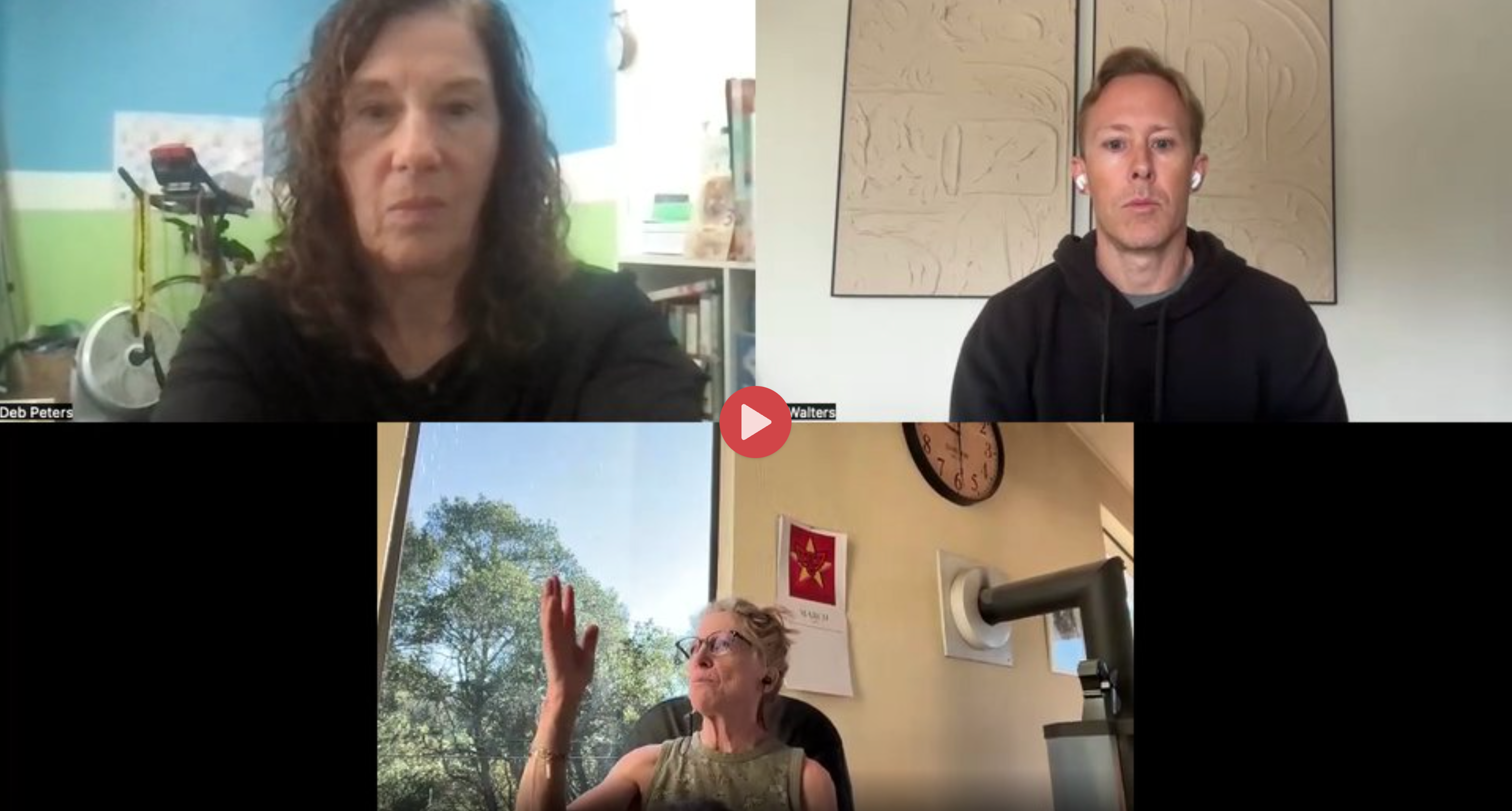

Here is the replay from today's office hours session. This one included discussions about shoulder labral tears, shoulder impingement, QL pain and hip pain. I hope more of you can join in the future!
If you ever need help figuring out which rehab or prehab program to start with, please don’t hesitate to message me. I’m hoping to add a feature in the future that asks you a few questions (like a PT) in order to help you find the best program to start with.
In the meantime, please feel free to message me if you ever need help getting started!
Sorry again about having to cancel last week's office hours session. Here is the link for the next one, if you want to come and talk with me about any pain or injury concerns you might have.
My apologies, but I need to cancel today's office hours session. Our power was turned off yesterday due to repairs on the power lines and will be out again this morning. I will send an update when I have a date for the next office hours session.
📚Lumbar disc herniations occur when the soft, gel-like center (nucleus pulposus) of a spinal disc in the lower back bulges or leaks through a tear in the tougher outer layer (annulus fibrosus).
🔎When a disc herniates, it may irritate or even mechanically compress nearby nerves, causing pain, numbness, or weakness in the lower back, legs, and sometimes feet. The severity of symptoms varies, with some individuals experiencing mild discomfort, while others suffer from significant neurological deficits depending on the location and extent of the herniation.
🧠It’s important to note that many of us with no pain (asymptomatic) actually have degenerative disc changes and disc herniations that would be visible on an MRI. Furthermore, many disc herniations heal and reabsorb without surgery.
✅If you or one of your clients are suffering from a lumbar disc herniation or disc bulge, I would encourage you to implement the exercise exercises in the nerve pain program here in the membership. Here is a link for that program.
Today's Instagram post was a video from Seattle Science Foundation that looked at the three primary ligaments that stabilize the lateral aspect of the ankle joint, which include: the anterior talofibular ligament (ATFL), calcaneofibular ligament (CFL), and posterior talofibular ligament (PTFL).
Together, these structures resist excessive inversion and internal rotation of the talus, particularly during weight-bearing and rapid changes in direction.
In an inversion ankle sprain, the ATFL is most commonly injured first due to its orientation and role in stabilizing the ankle in plantarflexion, followed by the CFL with more severe forces. Understanding this ligamentous anatomy helps guide rehabilitation, emphasizing progressive loading, proprioception, and restoring control through ranges where these ligaments are most stressed.
If you have suffered an ankle sprain or are working with someone who has, I would recommend following the ankle sprain program here in the membership. Here is a link for that program: