Tom W.

Image for the badge Activation.
Activation earned for a 1-day streak!
Image for the badge Control.
Control earned for a 7-day streak!

23 Jul 11:35

Thank you for joining, Erin! For SI joint pain, I would recommend following my low back pain program, which also addresses SI joint dysfunction. Here is a link for the program. If you have any questions along the way, please feel free to comment in the community or send me a message in the direct message area.

https://membership.rehabscience.com/programs/back-pain?category_id=259689

Reply

Posted

22 Jul 10:11

Image from Tom W.'s post

Hi everyone! A new video on exercises to help improve knee stability is available here in the app. Here is a link for the video.

https://membership.rehabscience.com/programs/knee-instability?utm_source=product&utm_medium=share&utm_campaign=content_share&utm_term=4275708&utm_content=mobile

Posted

21 Jul 12:01

00:45

📚The hamstring muscles (biceps femoris, semimembranosus, and semitendinosus) run along the posterior thigh and act to flex (bend) the knee and extend the hip.

🔎Because the hamstrings serve as antagonists to the quadriceps, they are vitally important in terms of knee stability and overall lower extremity control.

🏋🏼‍♂️However, most people have a tendency to pick exercises that target the quads (also very important) and neglect the hamstrings.

✅The app includes a hamstring injury rehab program that teaches you how to heal and strengthen the hamstrings after an injury. Click the link below to access the program.

https://membership.rehabscience.com/programs/hamstring-pain?category_id=258965

Aavash@123 The decision to move from one phase to the next is based on your symptoms and ability to perform exercises with full range of motion and good control. If you can perform all of the exercises in a given phase with mild or less pain, full range of motion and good movement control, then you are probably ready to move to the next phase in the program.

Reply

Posted

19 Jul 11:19

01:00

👉Soft tissue mobilization works by stimulating mechanoreceptors in muscle and fascia, which can decrease nociceptive signaling and reduce protective muscle guarding.

🔎This neurophysiological response, combined with improved local blood flow and tissue elasticity, often helps lower pain sensitivity and restore freer, more efficient movement.

🧠Soft-tissue mobilization of the lumbar extensor muscles (erector spinae group), which run along your lower spine can be a helpful strategy for reducing low back pain. In this video, I show a technique using a peanut massager tool, which works well for targeting the lumbar extensor muscles.

✅More techniques like this and other mobility and strengthening exercises can be found in the low back pain program here in the app.

Posted

17 Jul 08:47

00:23

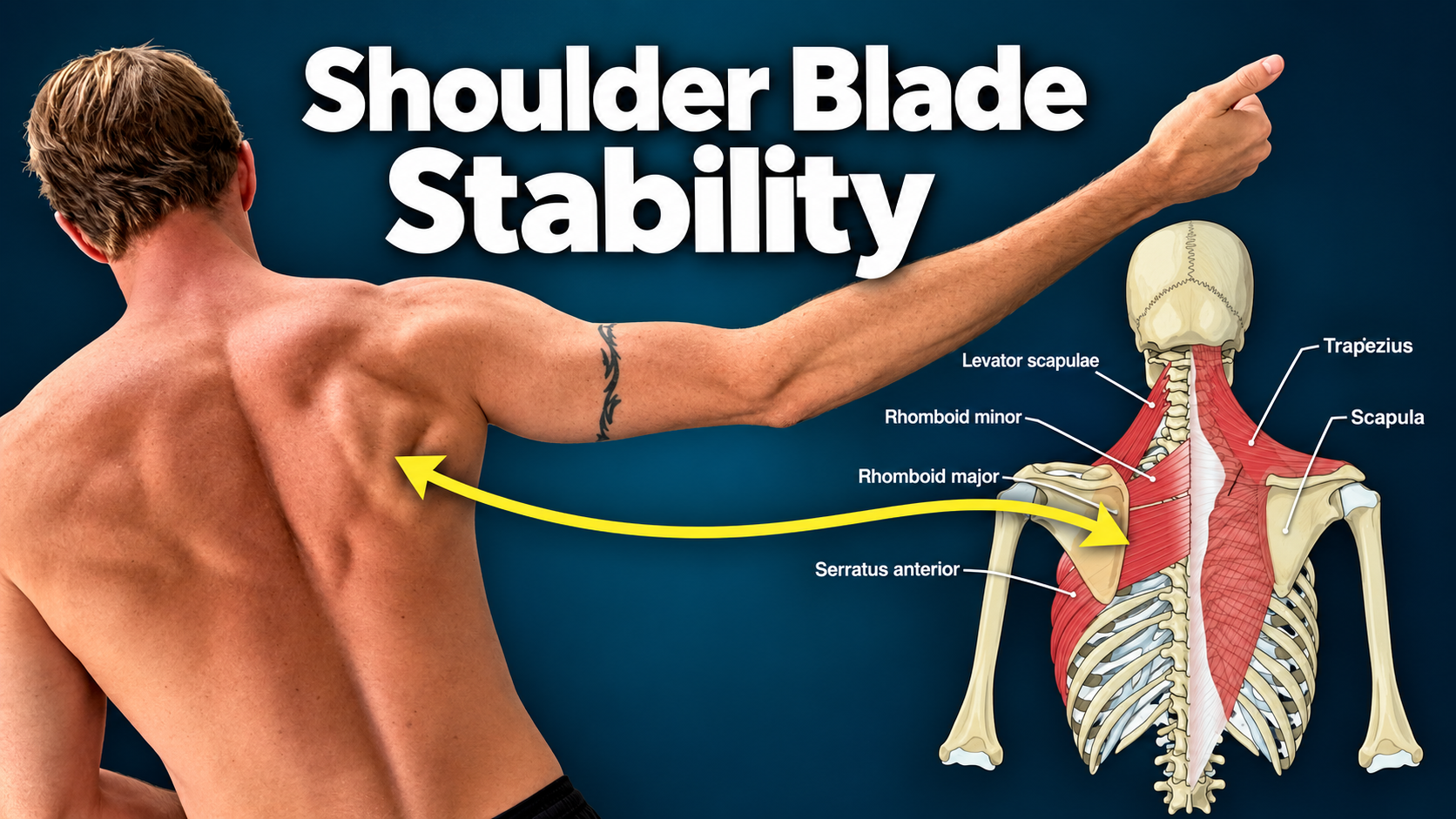
👉Scapulothoracic mobilizations are a valuable manual therapy technique for improving movement of the shoulder blade and relieving pain around the shoulder and mid back.

🔎In this technique, the patient lies on their side while the clinician reaches their fingers beneath the medial border of the scapula to gently lift it away from the rib cage. This helps mobilize the scapulothoracic joint — the interface between the scapula and the thoracic wall — which often becomes stiff in people with shoulder or upper back pain.

🧠Restoring mobility at this region allows the scapula to move more freely during overhead and reaching motions, reducing compensatory stress on the glenohumeral joint, rotator cuff, and surrounding soft tissues. By improving scapular motion and control, this mobilization can help decrease pain, enhance posture, and restore proper mechanics for functional movements like reaching, lifting, and pressing.

✅If you experience pain around the shoulder blade or upper back, restricted scapular movement may be a contributing factor. Manual mobilization, combined with targeted exercises for scapular control and thoracic mobility, can be an effective approach to restoring comfort and function.

I’m glad the video was helpful and that you are enjoying my book!

👍👍

Posted

15 Jul 07:13

00:37

📚The interphalangeal (IP) joint is the only joint between the two bones of the thumb: the proximal and distal phalanges. It functions as a simple hinge joint, allowing the thumb to bend (flexion) and straighten (extension).

🧠Although it has a relatively small range of motion compared to the other thumb joints, the IP joint plays an important role in precision grip. Every time you button a shirt, write with a pen, text on your phone, or pick up a small object, the IP joint helps position the thumb with accuracy.

🔎The primary muscle responsible for bending the joint is the flexor pollicis longus (FPL), while straightening is produced mainly by the extensor pollicis longus (EPL). Together, these muscles provide the fine motor control needed for everyday tasks.

✅Pain, stiffness, or arthritis at the thumb IP joint can make even simple activities surprisingly difficult. Maintaining mobility and strength throughout the thumb can help preserve hand function as we age.

2

14 Jul 13:50

That’s great to hear!