Hi everyone,
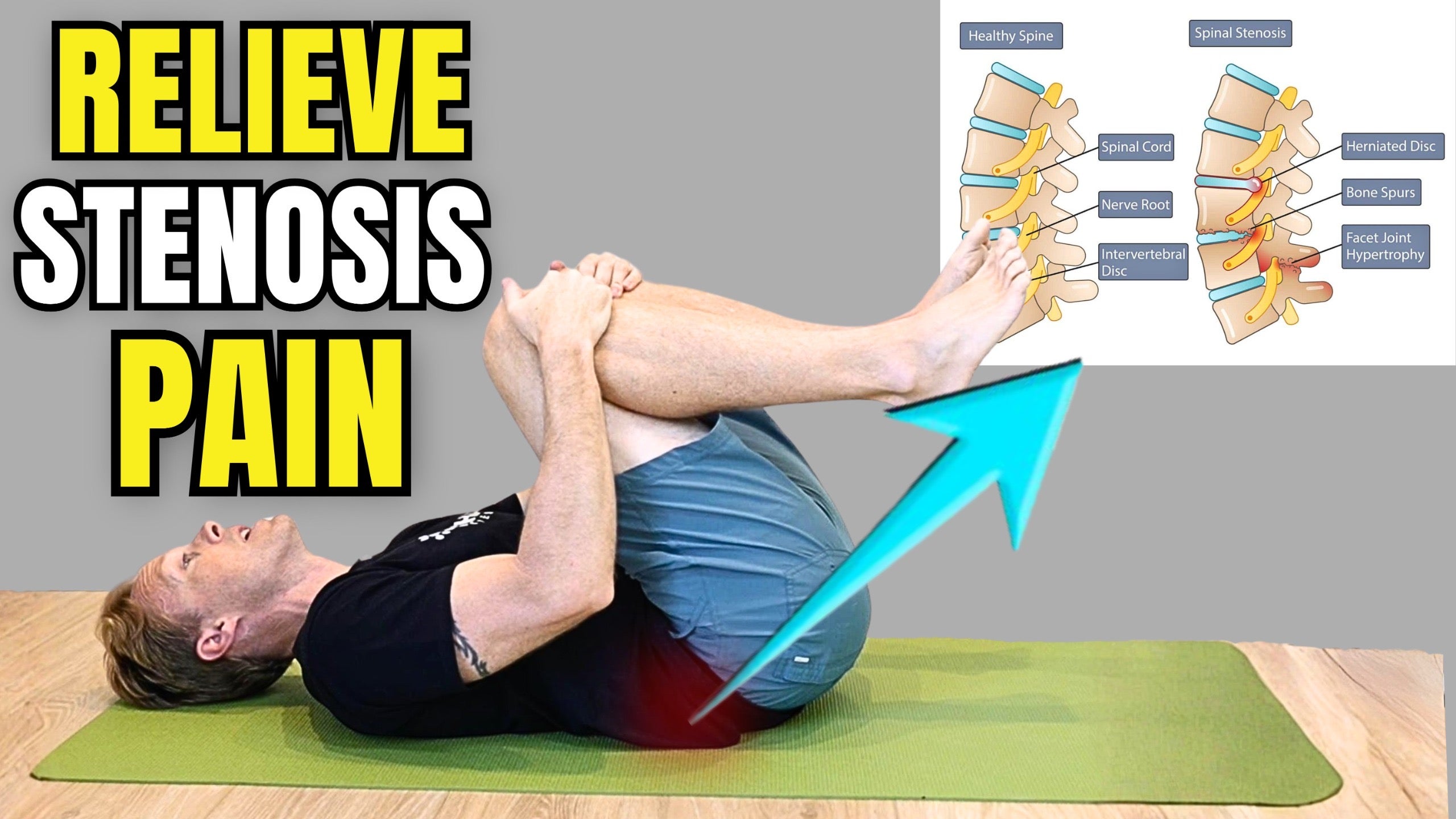
A new video on exercises for lumbar stenosis is now available. Here is a link for the video.


Hi everyone,
A new video on exercises for lumbar stenosis is now available. Here is a link for the video.
🔎Tender points in the posterolateral hip region (gluteus medius and minimus area) are a very common finding in the clinic.
🧠While the physiology underpinning these tender points is likely complex and can result from irritation of hip, lumbar spine and/or sacroiliac joint structures, simple exercise strategies are usually quite effective in terms of reducing discomfort.
✅Here in the app, you will find programs for piriformis syndrome (deep gluteal pain syndrome), SI joint pain and gluteal tendinopathy, which can all help with pain in the glute region.
👉Many people think a spinal manipulation works by “putting a joint back into place.” Research suggests the effects are likely much more neurophysiological than structural.
🧠A thoracic thrust manipulation creates a rapid burst of sensory input from the joints, muscles, and surrounding tissues. This input may temporarily alter how the nervous system processes pain, reduce pain sensitivity, and change muscle activation patterns.
🔎As pain decreases, the body often becomes less protective, allowing movement to feel easier and less restricted. This may explain why many people experience immediate improvements in mobility and comfort following treatment.
👌Interestingly, the audible “pop” is not required for a successful outcome. Research suggests the benefits can occur whether a pop is heard or not.
✅The takeaway: Thoracic thrust manipulation may help create a short-term window of reduced pain and improved movement. Exercise and movement can then help you take advantage of that window to build longer-lasting improvements.
📚 References:
1️⃣ Coronado RA, et al. Changes in Pain Sensitivity Following Spinal Manipulation: A Systematic Review and Meta-analysis. J Electromyogr Kinesiol. 2012.
2️⃣ Walser RF, et al. The Effectiveness of Thoracic Spine Manipulation for the Management of Musculoskeletal Conditions: A Systematic Review and Meta-analysis. J Man Manip Ther. 2009.
Here is a quick tutorial on how to perform the nordic hamstring exercise at home.
These are a great late stage hamstring strain exercise or prehab drill to keep your hamstrings strong and potentially reduce the risk of suffering a strain.
Did you know that the Nordic hamstring exercise was shown in one study to reduce hamstring re-injuries by close to 85%.
A more comprehensive hamstring rehab program can be found here in the app. Here is a link for the program.
https://membership.rehabscience.com/programs/hamstring-pain?category_id=258965
The peroneal or fibularis muscles evert and plantarflex the ankle and help support the arch. I have demonstrated three exercises here that can be used to train the peroneals and may be useful if you want to strengthen the region, if you have had a recent ankle sprain or are experiencing lateral ankle pain.
1️⃣Band eversion and plantarflexion - the key here is to point the foot (plantarflexion) and turn the foot out (eversion) at the same time. The band acts to pull the ankle toward inversion, so the evertors must work to resist the tension.
2️⃣Monster Walk with Band at Toes - in this exercise, the band placement at the toes acts to pull the ankles into inversion, so, again, the evertors are put to work.
3️⃣Calf Raise with Eversion Focus - in this exercise, a band or long towel is placed under the ball of the big toe and put on tension. Pressure must be kept over the big toe or the band/towel will slip out. The peroneals create the eversion necessary during the calf raise to keep the band/towel in place. If it slips out, then you are not engaging the peroneals enough.
✅The ankle sprain program here in the app includes peroneal strengthening exercises. Here is a link for that program.
https://membership.rehabscience.com/programs/ankle-sprain?category_id=261017
🔎In this video, we can see the biceps brachii (long & short heads), brachialis and lateral heal of the triceps brachii as the elbow moves through flexion and extension.
🧠Tendinopathy of the long head of the biceps brachii (LHB) tendon usually causes pain at the front or anterior aspect of the shoulder and is often aggravated with reaching activities, lifting overhead and after strenuous biceps strength training sessions (pull-ups, rowing, climbing, gymnastics, etc).
✅The biceps tendinopathy program can be found here in the app in the shoulder rehab section. Here is a link for the program.
https://membership.rehabscience.com/programs/biceps-tendinopathy?category_id=259882
📚The inside of the knee is stabilized by a group of structures called the medial knee complex, with two key ligaments being the MCL and POL.
MCL (Medial Collateral Ligament)
🔎The MCL is a broad ligament that runs from the femur to the tibia along the inner knee. Its main job is to resist forces that push the knee inward (valgus stress).
It has:
• Superficial MCL → primary restraint to valgus stress
• Deep MCL → blends with the medial meniscus and joint capsule for added stability
POL (Posterior Oblique Ligament)
🔎The POL sits just behind the MCL in the posteromedial corner of the knee. It works with the joint capsule and semimembranosus tendon to stabilize the knee near full extension.
Its main roles include controlling:
• Tibial rotation
• Valgus stress in extension
• Posteromedial knee stability
✅Together, the MCL and POL help control side-to-side movement and rotation of the knee during walking, cutting, pivoting, and sport activities.
The replay from today’s office hours is available at the link below!
Hi everyone, I know many of you already have my big red book, but I wanted to let you know that my new smaller body region specific books were released today!
If you’re looking for a smaller book that is easier to carry when traveling or going to the gym, these books would be a great option.
The Amazon link below will allow you to view all of the new books.
https://www.amazon.com/stores/Tom-Walters/author/B0BC4N3RWG?ref=ap_rdr&shoppingPortalEnabled=true
🔎The iliacus and psoas major muscles are our primary hip flexors. Psoas major is the deepest core muscle and the only muscle that attaches the trunk to the lower limb. It runs from the vertebrae and discs of the low back (T12-L5) down to the lesser trochanter on the inside of the femur. This unique configuration allows psoas to possess the dual role of spinal stabilizer and hip flexor.
🧠If you are experiencing pain in the low back, sacroiliac joint region or hip, it could help to address your hip flexors. The exercises in this video are some of the most helpful.
✅A more comprehensive hip flexor rehab program can be found here in the app under the hip category. Here is a link for the program.
https://membership.rehabscience.com/programs/hip-flexor-pain?category_id=258455
1️⃣Hip Flexor Stretch: Place the leg you would like to stretch down. Before moving from this position, make sure to squeeze your abs and glutes to place the pelvis in a position of posterior tilt, which help take any slack out of the hip flexors. Lunge forward slightly without arching the low back. Hold for 15-30 seconds and repeat 2-4 times each day.
2️⃣Front Plank: The front plank creates an isometric hip flexor contraction and is a great place to begin training if have had a recent injury. Shoot for 3 repetitions and hold each one for 20 seconds.
3️⃣Hip Flexor March: Place a mini-band around your feet and flex the affected hip as far as possible. Feel free to hold onto something, if you need to, as this is not necessarily meant to be a balance training exercise. Perform 3 sets of 12-15 reps.