Tom W.

Image for the badge Activation.
Activation earned for a 1-day streak!
Image for the badge Control.
Control earned for a 7-day streak!

Posted

07 Jul 10:08

Image from Tom W.'s post

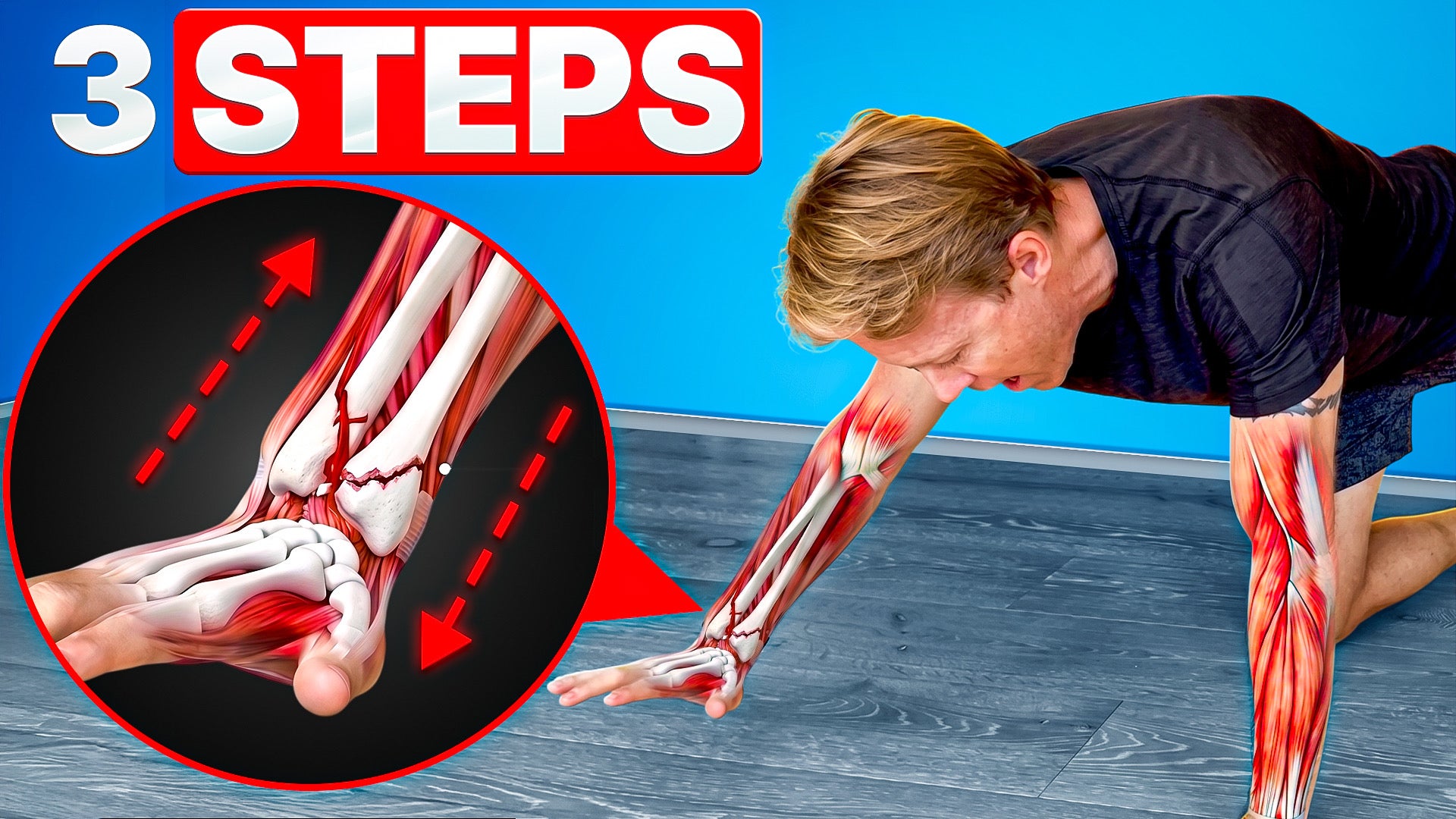
Hi everyone! A new video on Flexor Hallucis Longus (FHL) tendinopathy rehab is now available here in the app. If you have pain underneath your big toe, in the arch of your foot or on the inside of your ankle, these exercises are good to implement. Here is a link for the video.

https://membership.rehabscience.com/programs/fhl-rehab?utm_source=product&utm_medium=share&utm_campaign=content_share&utm_term=4261553&utm_content=mobile

Posted

06 Jul 09:36

00:16

👉Shoulder instability describes a condition of increased joint mobility that affects the static stabilizers of the shoulder joint (labrum, capsule and ligaments).

🔎When looking to improve shoulder stability, it’s important to perform exercises that target the four rotator cuff muscles and the other muscles that move and control the scapula (trapezius, serratus anterior, etc).

🧠Besides adding these types of exercises, it’s also important to consciously focus on activating the muscles that surround the shoulder joint when lifting the arm overhead or away from your body.

✅A more comprehensive program for shoulder instability can be found here in the app. Here is a link for the program.

https://membership.rehabscience.com/programs/shoulder-instability?category_id=259882

Posted

03 Jul 12:52

00:10

📚The neck or cervical spine includes seven vertebrae that are separated by six fibrocartilaginous intervertebral discs.

🧠The discs act as shock absorbers and also function as passive stabilizers of the spinal motion segment (2 vertebrae and the disc between them).

🔎This cervical fluoroscopy showcases flexion and extension of the cervical spine and is a great visual tool for observing our anatomy in action!

Posted

01 Jul 12:12

00:10

📚The anterior cruciate ligament (ACL) runs obliquely from the anterior intercondylar area of the tibia up to the posteromedial aspect of the lateral femoral condyle, and plays a critical role in preventing anterior translation of the tibia relative to the femur.

🔎In this dissection, the femoral condyles roll posteriorly over the tibial plateau as the knee joint flexes, allowing the intercondylar notch to open and reveal the ACL.

🧠Visualizing the ACL during flexion highlights its functional orientation and importance in dynamic knee stability. As the femur moves on the tibia, the ACL becomes taut, particularly in mid-to-deep flexion, helping to resist excessive anterior glide and rotational forces.

✅If you need a rehab program for an injury of the ACL or another ligament in the knee, the knee ligament injury program here in the app will teach you some of the most important exercises. Here is a link for this program.

https://membership.rehabscience.com/programs/knee-ligament-injury?category_id=258965

Posted

30 Jun 01:37

00:17

📚The IT band (ITB) is a dense, fibrous band of connective tissue that runs along the lateral thigh from the hip to the knee. ITB syndrome typically manifests as lateral knee pain (see image) and is one of the most common overuse injuries occurring in 12-25% of runners and 12.5% of cyclists.

🧠While stretching may help temporarily reduce pain in some people, research suggests that affected individuals should focus on incorporating exercises that strengthen the hip ABDuctors and motor control exercises designed to prevent the affected limb from deviating away from neutral when standing on one leg as this may sensitize the region.

🔎In general, 3 sets of 8-12 repetitions of each exercise should be performed 2-3 times per week. On the standing exercises, focus on keeping the knee aligned over the foot.

✅The app includes a more comprehensive IT band program that guides you through three phases of rehab. Click the link below to access the IT band syndrome program.

https://membership.rehabscience.com/programs/iliotibial-band-pain?category_id=258965

Posted

28 Jun 00:22

00:26

📚The fibularis muscles (fibularis longus & fibularis brevis) run along the lateral lower leg and serve as the primary evertors of the ankle.

🔎Besides everting the ankle and assisting in plantarflexion, the fibularis muscles also help stabilize the ankle during standing tasks, especially when on one leg or navigating uneven surfaces.

🧠During more severe inversion ankle sprains, the fibularis muscles (along with the lateral ankle ligaments) can be stretched and injured.

👉If you have pain in this region or have suffered a recent ankle sprain, the massage technique shown here may help reduce pain and improve function.

✅Besides trying this technique, you would also want to add exercises that strengthen these muscles. The ankle sprain program here in the app will teach you exercises for these muscles. Here is a link for the ankle sprain program.

https://membership.rehabscience.com/programs/ankle-sprain?category_id=261017

Posted

26 Jun 06:38

00:19

🔎Here is a great dissection that shows how the gastrocnemius and soleus muscles blend into the Achilles tendon and how the tendon is influenced by ankle movement.

🧠During ankle dorsiflexion, we see how the Achilles tendon and calf muscles are put on tension. Then, when the ankle moves into plantarflexion, the tendon and muscles are put on slack.

✅If you are suffering from Achilles tendon issues or a calf strain, I would recommend following the calf and Achilles pain program here in the app. Here is a link for the program.

https://membership.rehabscience.com/programs/achilles-tendinopathy?category_id=261017

Posted

24 Jun 12:31

Posted

23 Jun 07:10

00:27

📚Cervicogenic headache describes a form of headache that originates from the upper cervical spine and refers to regions of the head and/or face. Tissues that are thought to contribute to the development of this type of headache include muscles, ligaments, joints and discs in the region between the skull and C1-3 vertebrae.

🔎Symptoms are usually unilateral (on one side) and provoked with movement of the neck and palpation of the upper cervical spine. Other associated findings include weakness of the deep neck flexors and trigger points in the upper trapezius, levator, scalenes and suboccipitals.

✅These are just a few of the exercises that would be prescribed in physical therapy. A comprehensive program that guides you through the stages of healing can be found here in the app. Click the link at the bottom of this post to see this program.

1️⃣Suboccipital Ball Massage: Place a ball just below the base of the skull on any tender spots in the region of the suboccipital region.

2️⃣Upper Cervical Motor Control: The nodding motion shown here results from flexion and extension of the upper cervical spinal joints. This exercise is designed to teach the nervous system how to move this upper region of the neck without moving the lower portion of the neck.

3️⃣Neck Flexor Curls: Because deep neck flexor weakness can be associated with cervicogenic headache symptoms, an exercise that trains these muscles with higher loads may be appropriate. Tuck your chin and lift the head from the floor. Move slowly and perform 2-3 sets of 8-12 reps.

https://membership.rehabscience.com/programs/headache-pain?category_id=260344

Posted

21 Jun 22:56

00:20

📚During inspiration, our ribs lift and the ribcage expands allowing the lungs to fill with air. Interestingly, our ribs lift through different movement patterns depending on which portion of the ribcage you are examining.

1️⃣In the upper ribs (ribs 1-6), the pump handle motion is seen. As these ribs elevate, the front of the rib cage and sternum move upward and forward, increasing the front-to-back diameter of the chest.

2️⃣With ribs 7-10, The bucket handle motion is seen. As these ribs lift, they move more out to the sides, increasing the side-to-side width of the rib cage.

3️⃣Lastly, ribs 11-12 (floating ribs) do not attach to the sternum (breastbone) and move through a caliper motion. These ribs swing laterally outward like the opening of a caliper to help increase the width of the lower thorax.

✅Together, these motions help the thorax expand in multiple directions during inhalation. If rib cage or thoracic spine mobility is limited, breathing mechanics can become less efficient and nearby areas like the neck, upper back, and trunk may end up compensating.

👉If you have rib or thoracic spine issues, I would recommend starting with the exercises in the thoracic and rib pain program here in the app. Here is a link for that program.

https://membership.rehabscience.com/programs/thoracic-pain?category_id=259689