

Tom W.

Image for the badge Activation.
Activation earned for a 1-day streak!
Image for the badge Control.
Control earned for a 7-day streak!

25 Mar 16:01

Hey Brandon! I’m so glad to hear my PT exercises have been a good addition to the work you are doing with your clients. As always, thanks for watching the office hours replays and taking the time to leave a comment!

This program can help with upper and lower hamstring tendon pain. If your pain is mostly behind the knee, then these exercise can help in that situation as well.

24 Mar 15:28

Thank you for listening, Stephanie! I’m sorry to hear that your mom’s chiropractor doesn’t give her anything to work on at home. It’s so frustrating to me when practitioners operate in this way.

Reply

Posted

24 Mar 11:20

Image from Tom W.'s post

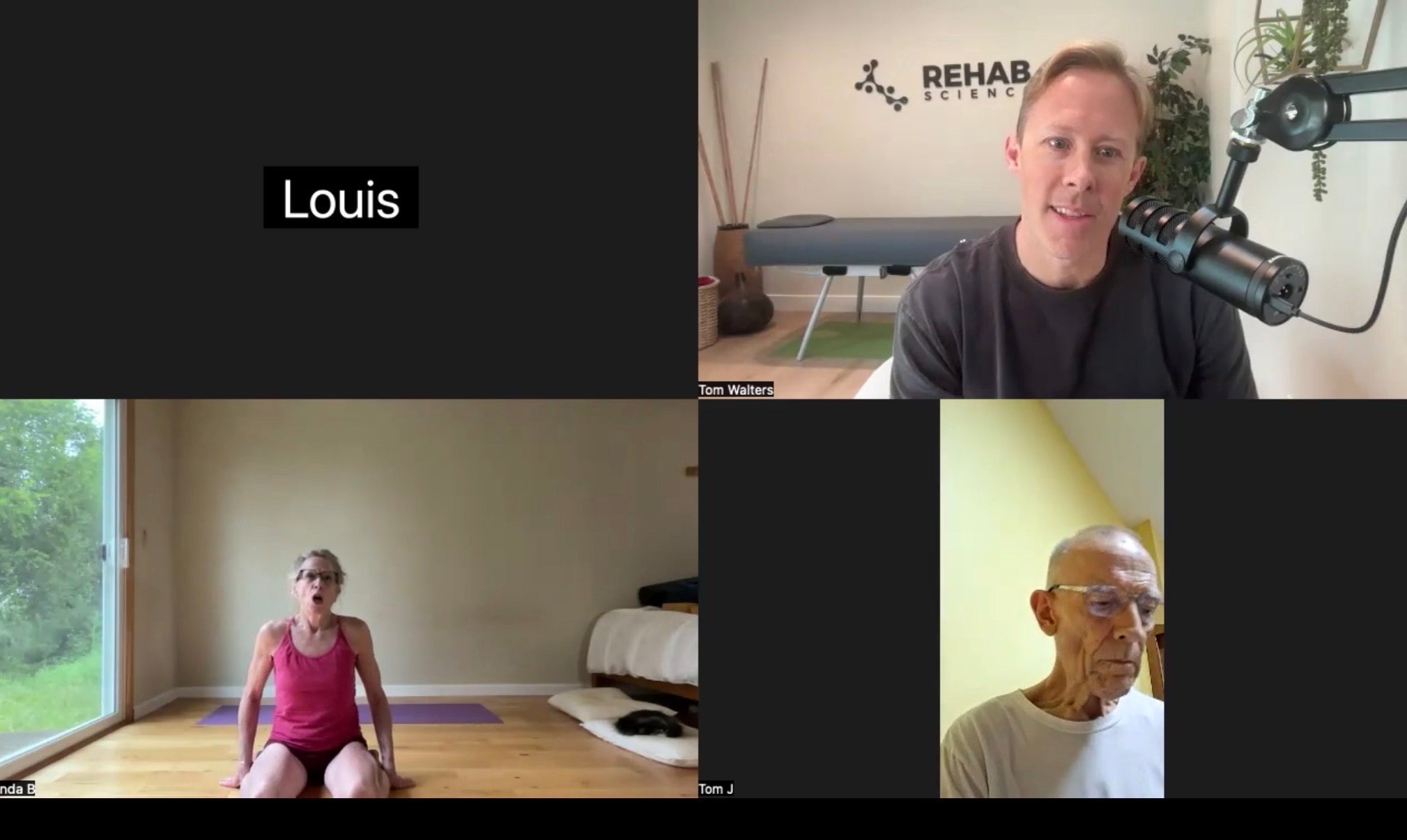
Here is a link for the replay of today's office hours session. I talked with Deb and Linda who are both practitioners and they shared a ton of good insights about movement, rehab and pain!

https://membership.rehabscience.com/programs/video1444760607-e8a576?category_id=262577&utm_source=product&utm_medium=share&utm_campaign=content_share&utm_term=4113664&utm_content=copy

Replied on post was deleted

23 Mar 14:17

Sorry, I had to switch up the day this week. Hope to see you at the next Wednesday office hours!

Most people who have meniscus related issues aren’t due to extremely traumatic injuries. In a lot of cases, people have degenerative meniscus tears that flare up from time to time, so a dance type of workout could have flared up a bit of meniscus pain.

Reply

Posted

22 Mar 08:39

Image from Tom W.'s post

The knee joint contains a lateral and medial meniscus, which act as shock absorbers and force transducers. The menisci possess a slight concavity, which improves the fit between the femur and tibia and enhances overall joint stability.

Meniscus injuries can be traumatic or degenerative in nature and are more common in athletes that participate in sports that involve twisting on a planted foot (soccer, basketball, volleyball, etc).

Symptoms associated with a meniscus injury are usually reported as knee pain, catching, locking, buckling of the knee or any combination of these symptoms.

It should also be noted that a large percentage of the asymptomatic population have meniscus tears on MRI and experience no symptoms.  So, don’t immediately get worried if you see evidence of meniscus changes on an MRI.  Instead, focus on improving your level of function and reducing pain.  Many meniscus issues can be resolved with non-surgical care.

3

Posted

18 Mar 11:10

Image from Tom W.'s post

A new video on bankart shoulder injuries is available here in the app. If you have ever dislocated your shoulder or if your shoulder clicks and feels loose, these are good exercises to implement. 

https://membership.rehabscience.com/programs/bankart-tear?category_id=267144&utm_source=product&utm_medium=share&utm_campaign=content_share&utm_term=4104615&utm_content=copy

17 Mar 12:31

Hi Brandon, I have prehab programs and plan to start uploading follow-along workouts soon. Here is a link for the prehab routines.

https://membership.rehabscience.com/categories/category-rrbj-ov66uw

Reply

Posted

17 Mar 11:41

Hi everyone! I just wanted to make sure you know that you can post here in the community or send me a direct message, if you ever have a question.

If the question is more personal, then the DM function is a great option. Here is a link for that area of the app.

https://membership.rehabscience.com/community/direct_messages/chats

If the question is something you don't mind others seeing, then the community area is a great place to ask, so that everyone can learn together.

4